
Low CGPA in University: Why First Year Breaks Students
Struggling with a low cgpa university first year result? Discover why 100L breaks smart students, the hidden grading traps, and how to start your comeback.

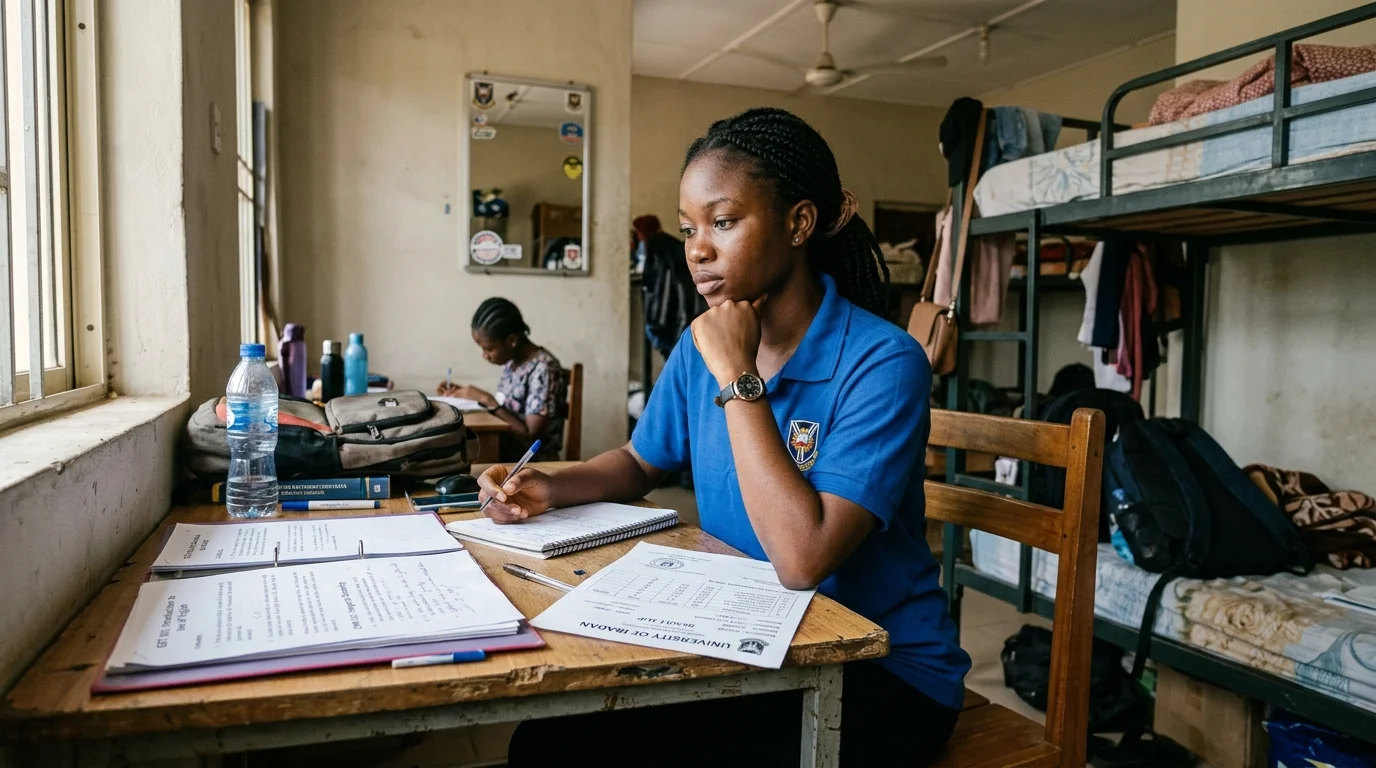
Few moments in a student’s life sting quite like seeing your first-year university results. You entered campus as the pride of your family and secondary school—armed with seven distinctions in WAEC, a 280+ JAMB UTME score, and high expectations of graduating with First Class Honours. Then the departmental portal updates, and reality hits like cold water: a 2.15, 2.40, or 2.78 CGPA staring back at you.
The immediate reaction is shock, followed by intense shame and isolation. You wonder if the admissions board made a mistake or if you suddenly lost the intellectual ability that carried you through your teenage years. Many students retreat into silence, terrified of admitting to their parents that they are currently sitting in Third Class or Second Class Lower territory.
Here is the truth every freshman needs to hear: First year in a Nigerian tertiary institution is not an intellectual assessment; it is an environmental shock test.
Thousands of brilliant minds crash in 100 Level not because they are incapable, but because the operating system of Nigerian universities is fundamentally different from anything secondary school prepared them for. When you understand the systemic dynamics behind why first year breaks students, you can strip away the shame, diagnose your operational blind spots, and start executing an authentic turnaround.
1. The Secondary School Mirage: Why WAEC and JAMB Success Fails to Transfer
In secondary school, the learning environment is curated and guided. Teachers write comprehensive notes on chalkboards, break complex topics into bite-sized explanations, monitor class attendance, and conduct regular morning drills. Textbooks like New General Mathematics or Ababio Chemistry mapped cleanly to external WAEC syllabuses. If you were disciplined enough to memorize definitions and repeat formulas, high grades were guaranteed.
Nigerian universities operate on the exact opposite philosophy: radical personal autonomy.
Lecturers rarely teach the entire syllabus. A professor might enter an amphitheater, lecture for 45 minutes on introductory thermodynamics, write three incomplete equations on the board, and declare: "Read the rest in Halliday & Resnick." In secondary school, the teacher provided 80% of what was tested. In university, the lecturer provides 25%; you are expected to research, cross-reference, and master the remaining 75% on your own.
Students who rely on secondary school study habits—passively rereading lecture handouts and highlighting sentences—find themselves blindsided during semester examinations. University exams do not test recognition; they test deep application and synthesis under timed pressure. Understanding the reality of 100 Level jambite academic shock is the first step toward discarding outdated study methods.
2. Environmental Friction: Crowded Halls, Mic Failures, and Inaccessible Lecturers
No secondary school prepares a teenager for the raw physical friction of a Nigerian public university campus:
- **Overcrowded 1,000-Capacity Lecture Halls:** At 7:15 AM, hundreds of students are already scrambling for wooden benches in a humid, poorly ventilated lecture theatre meant for 300 people. If you arrive late, you end up sitting on a windowsill, standing at the back doorway, or struggling to hear through crackling public address speakers.
- **The Invisible Lecturer Phenomenon:** In many large 100L general courses (such as GST 111, CHM 101, or MTH 101), asking a question during the lecture is virtually impossible. After the class, the lecturer disappears into a secured faculty building, leaving confused students with nowhere to seek immediate academic clarification.
- **Power Outages and Hostel Distractions:** Returning from lectures exhausted only to face blackout conditions in campus hostels means you cannot revise immediately. Generator noise, stifling room heat, and long queues for water drain your cognitive energy before you even open a notebook.
Under these grueling conditions, academic decline is not a sign of personal laziness; it is the natural consequence of unmanaged environmental stress. If left unaddressed, this relentless friction leads straight to academic burnout and exhaustion in university.
3. The Freedom Trap: Hostel Autonomy and Time Mismanagement
For over 80% of Nigerian university freshmen, 100 Level represents their first taste of complete independence from parental oversight. There are no parents telling you when to sleep, no house masters checking prep rooms, and no morning alarm bells.
This sudden vacuum of authority creates three fatal lifestyle patterns:
The "Plenty of Time" Fallusion
During the first six weeks of the semester, campus feels deceptively relaxed. Lecturers miss occasional classes, student union events dominate the calendar, and deadlines seem far away. Students mistake this initial calm for low academic rigor, spending evenings on social media, video games, or endless corridor discussions in hostel blocks.
The Night Class & TDB Panacea
Because daytime hours are wasted, freshmen resort to desperate "Till Daybreak" (TDB) cram sessions three days before examinations. Rushing four months of advanced calculus or organic chemistry in 72 sleep-deprived hours causes massive cognitive overload. You enter the examination hall physically exhausted, leading to sudden memory blackouts where previously reviewed concepts vanish completely.
4. The Continuous Assessment Trap: Losing the Battle Before the Exam
The most mathematically destructive trap in Nigerian universities is neglecting Continuous Assessment (CA). In almost every institution operating under NUC standards, your semester score is split into:
$$\text{Final Course Grade} = \text{Continuous Assessment (30–40 Marks)} + \text{Final Exam (60–70 Marks)}$$
How the CA Deficit Destroys Your Grade
Many fresh students treat 10-mark departmental impromptu tests or attendance sheets as trivial exercises. Consider the mathematics:
- **Student A (Disciplined CA Strategy):** Scores 26/30 in mid-semester tests, assignments, and practicals. To achieve an 'A' grade (70%), they only need to score **44 out of 70 (63%)** in the final examination.
- **Student B (Neglected CA Strategy):** Skips one test, submits an assignment late, and scores 12/30. To reach that same 70% 'A', they must score an astonishing **58 out of 70 (83%)** in a notoriously difficult departmental exam.
By neglecting mid-semester tests, fresh students make an 'A' mathematically near-impossible before they even set foot in the exam hall. Understanding where these grade margins place you on the Nigerian university grading system classifications reveals why a strong CA defense is essential.
5. Immediate 5-Step Comeback Plan for First-Year Undergraduates
If your 100 Level first semester GPA fell below expectations, do not panic. Your academic story is just beginning. Take these concrete actions today:
- **Conduct an Emotion-Free Grade Audit:** Print your result slip. For every course where you scored below a C, determine whether the failure was caused by poor CA marks, unfamiliarity with past questions, or exam hall panic.
- **Secure Past Departmental Question Papers:** Immediately acquire 5 to 10 years of past exam papers for all second-semester courses. Analyze the recurring questions, proof formats, and lecturer preferences before lectures advance.
- **Lock In a High-Friction Active Study Routine:** Stop passively reading textbooks. Use 25-minute retrieval blocks: study without interruption, close your book, and write down every concept or formula from memory.
- **Form a Focused 3-Person Study Syndicate:** Partner with two serious coursemates. Divide broad syllabus topics, research them independently, and teach each other weekly in quiet library discussion cubicles.
- **Protect Your Continuous Assessment Marks:** Treat every mid-semester test with the same intensity as a final degree exam. Securing 25+ out of 30 in your continuous assessment provides an unbreakable buffer.
Build an Unbreakable System for Your Academic Comeback
Recovering from a disappointing first year does not require natural genius; it requires a structured, repeatable study and exam execution system built for Nigerian university realities.
The Academic Comeback Package
A complete 7-part digital system created specifically for Nigerian university students ready to master deep work, eliminate exam anxiety, and rebuild their CGPA after first-year setbacks.
- Get Good at Hard Things — Cognitive active recall protocols to master high-credit courses
- How to Score High in Any Exam — Reverse-engineer Nigerian lecturers' marking schemes
- 30-Day Semester Study Tracker — Step-by-step revision schedules designed for campus life
Frequently Asked Questions
Why do straight-A secondary school students often get low CGPAs in 100 Level?
Secondary school rewards passive memorization and supervised study. Nigerian universities demand autonomous time management, aggressive past question analysis, and navigating overcrowded halls where lecturers provide only 20% of the required curriculum.
Can a low 100 Level CGPA permanently ruin your degree classification?
No. While 100 Level establishes your initial mathematical denominator, having 6 to 8 semesters remaining provides ample credit units to raise a 2.10 or 2.40 CGPA into a solid Second Class Upper (3.50+) through consistent 4.20+ semester GPAs.
What is the biggest operational mistake fresh students make in their first semester?
Treating Continuous Assessment (CA) tests casually. Losing 12 to 18 marks in mid-semester tests and practicals means you must score an exceptional 60+ out of 70 in the final exam just to earn a B or an A.
How does hostel social life contribute to first-year academic decline?
Unrestricted autonomy without accountability leads many first-year students to replace evening study hours with endless corridor gist, late-night campus fellowship commitments, or gaming, leaving them exhausted during 8:00 AM lectures.
What Did You Like Most About This Guide?
Share your favorite takeaway, a study technique you tested, or ask a question.