
First-Generation Students: Weight of Family Hope
How to carry the immense psychological burden of being the first person in your entire family or village to attend university in Nigeria.

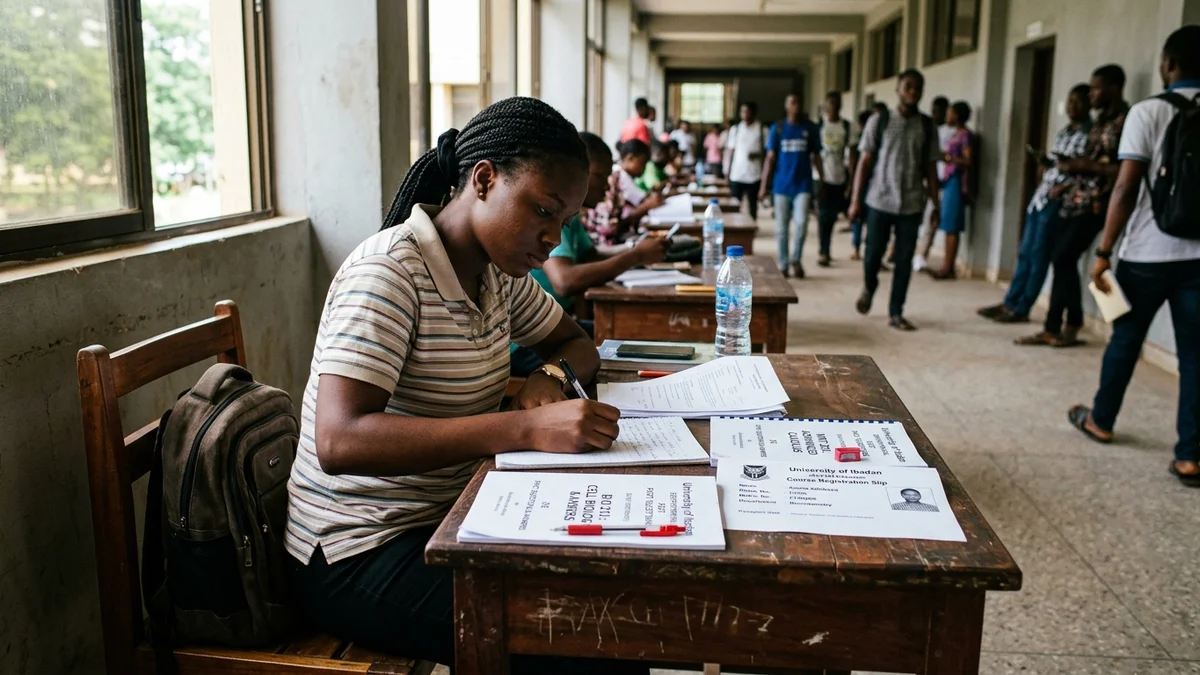
First-Generation Students: Weight of Family Hope
You carry an entire lineage on your back.
You are the first person in your family—perhaps the first person in your entire village community—to pass JAMB, gain admission, and step foot into a university lecture hall.
When your admission letter arrived, your mother danced in the market. Your father bought drinks for the elders. Relatives came to your family compound to lay hands on your head and pray: "You are the one who will lift our name out of the dust. You are the one who will build us a modern house. You are our doctor. You are our lawyer."
This pride feels intoxicating at first. But by your second semester, that blessing transforms into a crushing, suffocating weight.
Every time you sit in an exam hall, you don't just see exam questions; you see the faces of twenty relatives waiting for good news. A single 'C' or 'D' grade doesn't just feel like an academic slip—it feels like you have betrayed your family's generational salvation.
Here is the psychological reality of being a First-Generation University Student in Nigeria, and how to carry that mantle without breaking.
1. The Invisible Barrier: Lack of Institutional Capital
Children of university-educated parents inherit an unwritten playbook of academic survival:
- They know that 100-level continuous assessment (CA) tests count for 30% of their final grade.
- They know how to speak comfortably with professors during office hours without trembling.
- They have older siblings who pass down verified course summaries and past question patterns.
First-generation students have none of this. You enter the university like an immigrant in a foreign land. Every institutional norm must be learned through painful trial and error.
When you struggle, you cannot call your parents for academic guidance. If you tell them you are having difficulty with Organic Chemistry or Vector Analysis, they will simply tell you: "Pray more, my child. Fast on Wednesdays. Read harder." While well-intentioned, spiritual advice cannot replace active recall study strategies or past exam analysis.
Deconstruct the psychological origins of academic insecurity in imposter syndrome in Nigerian universities: why you feel out of place.
2. Navigating the Disconnect Between Home and Campus
As your vocabulary, critical thinking, and world perspective expand through higher education, an uncomfortable psychological rift emerges between you and your home community:
- **The Expectation of Omniscience:** Because you attend university, relatives assume you understand everything from commercial law to medical prescriptions. Disclosing that you don't know makes you feel like an imposter.
- **The Presumption of Instant Wealth:** Many families equate entering university with instant financial prosperity. Relatives may begin soliciting contributions for burial ceremonies or child dedications, unaware that you are skipping meals to buy handouts.
- **The Fear of Alienation:** You may start to feel guilty when speaking formal English or adopting modern perspectives, fearing that your family will accuse you of *"becoming too proud"* or forgetting your roots.
Learn how to communicate your limits to your parents in handling parental expectations and academic pressure in Nigeria.
3. The 4 Survival Pillars for First-Gen Scholars
To transform this generational pressure into academic fuel rather than chronic anxiety, build these four support structures:
A. Seek Academic Mentorship Actively
Do not suffer in silence. Find a 400-level departmental scholar, a postgraduate student, or an approachable graduate assistant. Say directly: "I am the first in my family to pursue this course. I want to understand how top students study for this department's exams." Academics respect genuine humility and ambition.
B. Separate Your Identity from Your Family's Destiny
You are a human being, not a financial retirement plan for your extended family. While honoring your parents is virtuous, carrying their entire economic salvation on your 20-year-old shoulders will paralyze your cognitive faculties. You must study for your own intellectual mastery first.
C. Build a Peer Cohort of High Achievers
Surround yourself with disciplined, forward-looking coursemates who normalize high grades, library focus, and career preparation. Their collective confidence will dilute the loneliness of your first-generation journey.
Explore upcoming strategies on student financial management in campus student financial literacy and planning.
4. Your Heritage Is Your Competitive Advantage
When the pressure feels overwhelming, remember why you are here:
- You possess a level of grit, resilience, and hunger that comfortable, privileged students will never understand.
- You know the physical cost of sacrifice.
- You have survived difficult secondary schools, harsh economic environments, and institutional hurdles just to earn a seat in this university.
That resilience is not a handicap—it is your greatest superpower. When you graduate, you will not just collect a certificate; you will permanently alter the trajectory of your entire family lineage.
Frequently Asked Questions
What is the biggest challenge facing first-generation university students in Nigeria?
The lack of 'institutional cultural capital.' Without parents or relatives who attended university, first-gen students have no one to teach them how CGPAs work, how to network with lecturers, or how to navigate academic probation.
How can first-generation students deal with relatives who expect immediate financial wealth during school?
Educate family members gently about the reality of university training: explain that undergraduate education is an investment phase, not an income-generating business, and that real returns materialize after graduation and qualification.
Why do first-generation students experience severe imposter syndrome?
When surrounded by coursemates whose parents are doctors, lawyers, or senior professors with private laptops and affluent vocabulary, first-gen students mistakenly believe they don't belong in higher academia.
How can first-gen undergraduates find high-impact academic mentors?
Identify approachable junior lecturers, graduate assistants, or final-year departmental scholars. Visit during office hours with specific course questions and ask for advice on mastering departmental examination styles.
What Did You Like Most About This Guide?
Share your favorite takeaway, a study technique you tested, or ask a question.