
Imposter Syndrome: Why University Makes You Feel Dumb
Overcoming imposter syndrome in demanding Nigerian universities. Why former top high school students feel intellectually inadequate and how to rebuild academic confidence.

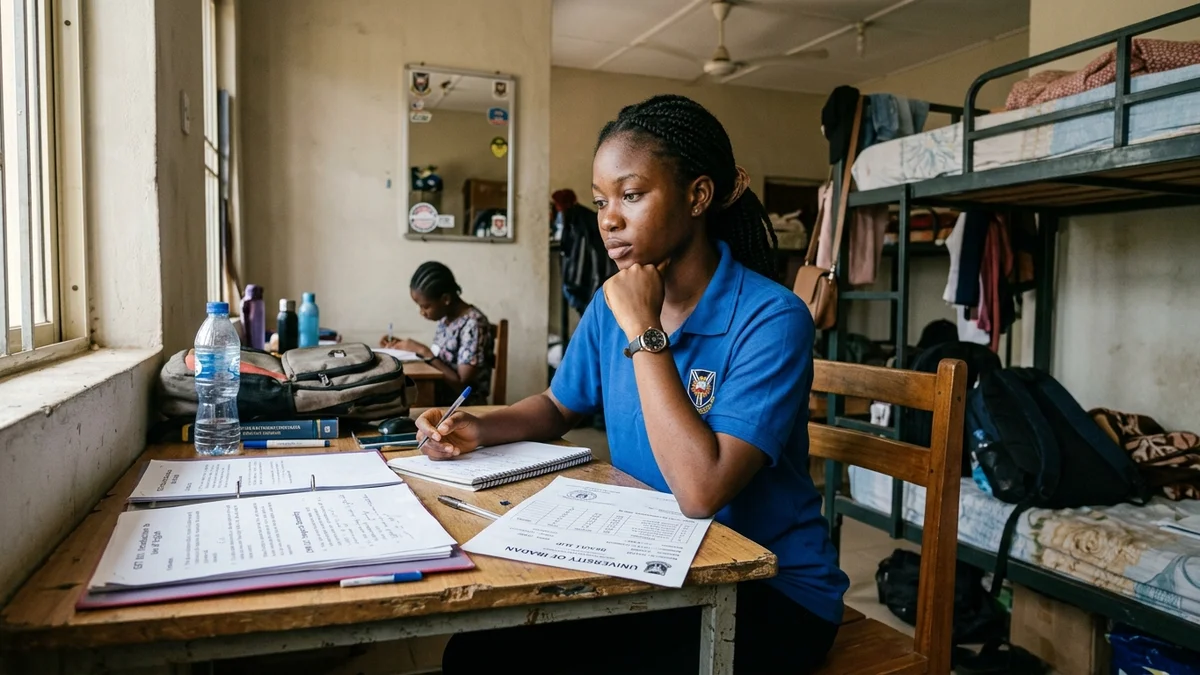
Imposter Syndrome: Why University Makes You Feel Dumb
In your secondary school, you were a legend.
You were the senior prefect, swept nine distinctions in WAEC, cleared JAMB with a 290+ score, and your picture hung on the school honours board. Your teachers told you that university would be a breeze.
Then you arrived at the faculty lecture theatre.
In your first 200-level Engineering Mathematics, Anatomy, or Commercial Law test, you score 11 out of 30. Around you, students from prestigious federal unity schools and seasoned repeat scholars casually debate complex academic proofs you cannot even parse.
A cold, paralyzing thought enters your mind:
"I am a fraud. My high school results were a fluke. I am not smart enough to be here. Soon, everyone will find out I don't belong."
Welcome to Pillar 3 of university survival: Student Mental Health & Well-being.
You are experiencing Imposter Syndrome, one of the most widespread psychological afflictions among high-achieving undergraduates in Nigerian tertiary institutions.
1. The Neuroscience of the "Big Fish, Small Pond" Collapse
In educational psychology, this phenomenon is documented as the Big-Fish-Little-Pond Effect (BFLPE):
In secondary school, you were a giant fish swimming in a small pond of 80 students. Your academic confidence was artificially elevated by comparing yourself to peers who had little academic drive.
When you gain admission into competitive university programs (Medicine, Law, Engineering, Pharmacy, Accounting), the National Universities Commission (NUC) system pools the top 2% of academic performers from hundreds of schools into a single lecture hall.
You are no longer a giant fish in a pond; you are swimming in a turbulent ocean of sharks.
When your early grades drop, your brain interprets the change not as an environmental shift, but as personal intellectual failure.
To understand how first-year shock breaks capable students, read our analysis on why first year breaks students and causes low CGPA.
2. The 3 Cognitive Distortions of the Campus Imposter
Imposter syndrome distorts your objective reality through three toxic psychological filters:
Distortion 1: Attributing Success to Luck, Failure to Incompetence
When you score an 'A' in a difficult course, your brain whispers: "The exam was easy; the lecturer marked generously; I just guessed the right past questions." But when you score a 'C', you conclude: "This proves I am fundamentally unintelligent."
Distortion 2: The Silent Comparison Fallacy
You see your coursemates laughing casually in the faculty quadrangle, looking relaxed and confident. You assume they grasp the lecture effortlessly. In reality, 85% of them are privately terrified, experiencing the identical panic while masking it behind bravado.
Distortion 3: The Avoidance Trap
Because you fear looking dumb, you refuse to raise your hand in class, avoid attending tutorial discussion groups, and delay opening challenging textbooks until examination week.
Learn how to break study paralysis and regain momentum in academic burnout: why you cannot bring yourself to read.
3. The Re-Engineering Protocol: How to Neutralize Imposter Feelings
Overcoming imposter syndrome does not require pretending you know everything. It requires shifting from an Ego-Based Mindset to a Tactical Craft Mindset:
- **Decouple Grades from Human Worth:** An exam score is not a measurement of your genetic IQ or moral value. It is simply diagnostic feedback showing where your retrieval practice needs adjustment.
- **Build an Objective Proof Log:** Create a folder on your phone titled *"Hard Problems Solved."* Screenshot complex equations you mastered, essays you completed, and CA tests you cleared. When self-doubt hits, review the objective evidence.
- **Embrace the Power of "Not Yet":** Replace *"I don't understand Thermodynamic Entropy"* with *"I have only completed two study cycles on Thermodynamic Entropy; I will master it after three more active recall sessions."*
For students carrying the heavy expectations of uneducated parents, explore our guide on first-generation university students and the weight of family hope.
### 🧠 Join the Student Mental Health & Mindset Network
Struggling with academic self-doubt, anxiety, and exam pressure?
>
Join our **Free Academic Comeback WhatsApp Community**. Connect with empathetic students who understand the struggle, share mental health coping tools, and rebuild your confidence.
>
👉 **[Join the Student WhatsApp Community Now](https://chat.whatsapp.com/invite/academic-pack-community)**
Frequently Asked Questions
What causes severe imposter syndrome among first-year university students in Nigeria?
The transition from being the top student in a secondary school to a crowded university lecture hall of 500 former top students. Unfamiliar grading standards and early test failures shatter long-held academic identities.
How can you tell if you are experiencing imposter syndrome or actual academic deficiency?
Imposter syndrome is marked by attributing your successes to 'luck' or 'easy marking' while attributing mistakes to personal stupidity. If you understand foundational concepts but suffer chronic anxiety that you 'don't belong,' it is imposter syndrome.
Can imposter syndrome directly harm undergraduate examination grades?
Yes. It triggers avoidant study paralysis—students avoid reading difficult topics or asking lecturers questions for fear of exposing their perceived incompetence, leading to last-minute cramming and poor results.
What is the fastest cognitive technique to neutralize imposter feelings before tests?
Objective evidence logging. Maintain a written record of hard concepts you successfully mastered, past questions you solved independently, and concrete study milestones rather than relying on subjective emotions.
What Did You Like Most About This Guide?
Share your favorite takeaway, a study technique you tested, or ask a question.