
Pushing Through Exhaustion vs Taking Sick Day: Rules
How Nigerian students can know when to push through severe academic fatigue and when to stop, take a sick day, and avoid total physical collapse.

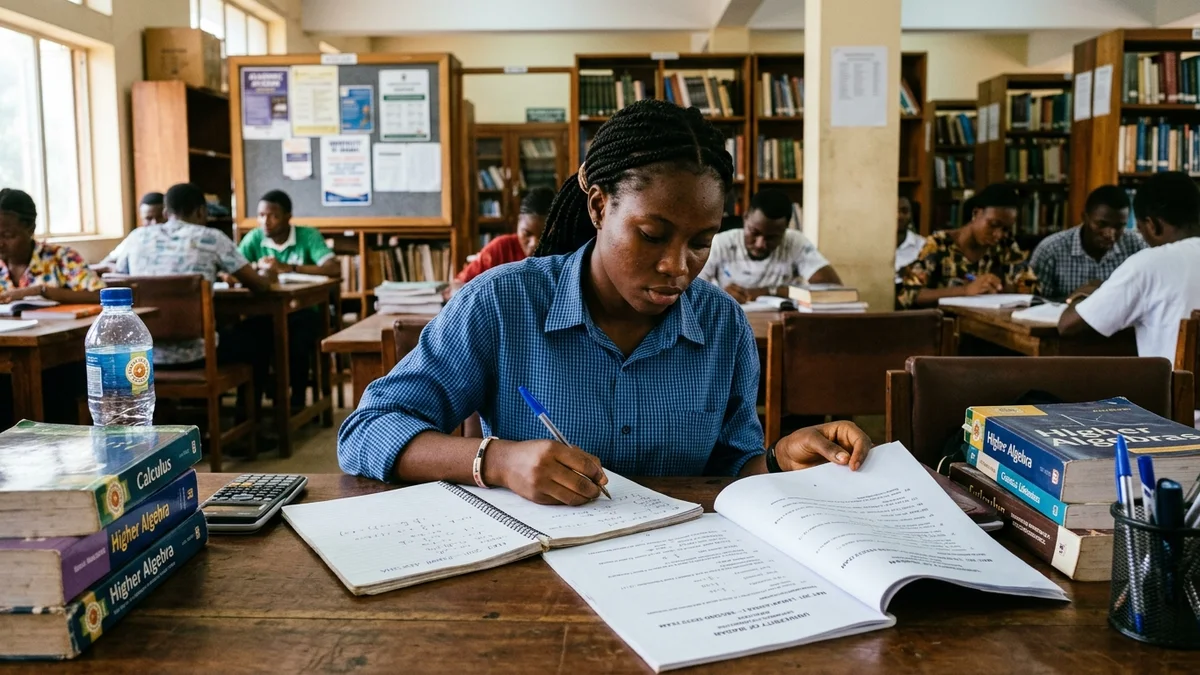
Pushing Through Exhaustion vs Taking Sick Day: Rules
It is 2:00 AM during examination week.
Your head throbs with a dull, persistent ache. Your eyes are bloodshot and dry. Every time you read a sentence in your engineering or economics handout, your mind drifts before you reach the end of the line.
You have three more chapters to cover before an 8:00 AM paper.
A loud internal voice screams: "You must push! You cannot afford to sleep! First-class students don't rest during exams! Drink another sachet of coffee!"
Another part of your body is screaming for mercy: "If you don't lie down right now, you are going to collapse in that exam hall."
Every Nigerian undergraduate faces this high-stakes dilemma: Do you push through the wall of exhaustion, or do you surrender to rest?
Pushing when you shouldn't leads to acute exam blackouts, fainting in lecture halls, and severe malaria flare-ups.
Resting recklessly when you should have persevered leads to unpreparedness and carryovers.
Here is the objective decision framework to protect both your health and your semester GPA.
1. The Law of Diminishing Cognitive Returns
In cognitive ergonomics, mental productivity follows an inverted U-curve:
| Study Phase | Cognitive State | Retention Efficiency | Strategic Action |
|---|---|---|---|
| Phase 1: Peak Alertness (Hours 1–3) | Optimal neural processing | 90% – 100% Retention | Tackle complex calculations, heavy proofs, and difficult foundational concepts |
| Phase 2: Diminishing Returns (Hours 4–5) | Mild synaptic fatigue, slowed comprehension | 40% – 60% Retention | Transition to active recall, past exam practice questions, or flashcard review |
| Phase 3: Negative Cognitive Yield (Hour 6+) | Severe exhaustion, micro-sleeps, confusion | Negative Yield (Induces memory errors) | Stop immediately. Close books and sleep 5–6 hours to allow hippocampal memory consolidation |
When you cross into Negative Cognitive Yield:
- Reading speed drops by up to 75%.
- The brain begins conflating facts (e.g., memorizing formulas with reversed mathematical signs).
- Information read in this state is not consolidated by the hippocampus into long-term storage; it evaporates the moment you sit down in the examination hall.
Understand why sleep is a biological necessity for exam success in TDB all-nighters vs 5-hour sleep: exam memory impact.
2. The 4-Point Diagnostic Test: Push vs. Stop
Before swallowing another cup of instant coffee or an energy drink at 1:00 AM, audit yourself against this clinical diagnostic checklist:
| Biological Indicator | The "Push" Green Light | The "Stop & Sleep" Red Light |
|---|---|---|
| Body Temperature | Normal (36.5°C - 37°C) | Febrile, hot forehead, shivering (Malaria/Typhoid) |
| Eye & Vision State | Mild heaviness; clears after washing face | Blurred vision, double vision, burning tear ducts |
| Cognitive Retention | Able to recall a paragraph after 60 seconds | Reading the same paragraph 5 times with zero comprehension |
| Cardiovascular State | Steady, normal resting pulse | Palpitations, chest tightness, dizziness upon standing |
**The Golden Rule:** If you exhibit two or more "Red Lights," any further study is biologically counterproductive. Shut your books, set an alarm for 5 hours of deep sleep, and review high-yield summaries for 45 minutes in the morning.
Deconstruct academic burnout symptoms in academic burnout student symptoms: why you cannot bring yourself to read.
3. How to Execute an Emergency "Power Sleep Reset"
If you must stop reading at 2:00 AM with an 8:00 AM exam looming:
- **Do Not Sleep on Your Notebook:** Dragging yourself to your mattress or a flat surface signals to your parasympathetic system that you are resting intentionally.
- **Execute the "Caffeine Nap" Shortcut:** Drink half a cup of warm coffee immediately before closing your eyes, then set an alarm for exactly 25 minutes. Caffeine takes 20-25 minutes to clear adenosine receptors. You wake up right as the chemical stimulant kicks in, cutting sleep inertia.
- **The Morning 60-Minute Triage:** Wake up at 6:30 AM. Do not try to read the 3 unread chapters from cover to cover. Review only:
- Bolded chapter summary formulas.
- Past examination question patterns from the last 3 years.
- Diagram labels and core definitions.
Explore hostel fatigue management in shared space exhaustion: the mental cost of no privacy in student hostels.
4. Health Is Your Greatest Academic Asset
A carryover course can be retaken and cleared in a subsequent semester.
A ruptured stomach ulcer, a cardiac arrhythmia triggered by energy drink overdoses, or a nervous breakdown in an emergency room will derail your university journey for an entire year.
Know when to fight with courage, and have the wisdom to allow your brain to rest. Sustainable academic excellence is built on physiological preservation.
Frequently Asked Questions
How can you tell the difference between normal study laziness and dangerous burnout?
Normal laziness disappears when meaningful urgency appears (like an exam tomorrow). Burnout produces profound physical paralysis, emotional numbness, unrefreshing sleep, and nausea at the thought of opening a notebook.
What happens to cognitive memory when you study while running a high fever?
Elevated core body temperature impairs hippocampal synaptic plasticity. Information read during acute febrile illness (malaria/typhoid) is rarely consolidated into long-term memory, rendering study sessions almost useless.
How can a student take an academic 'rest day' without falling behind on syllabus?
Schedule an intentional 'Recovery Block': 24 hours of zero study, total digital rest, high protein nutrition, and 9 hours of sleep. An intentional rest day restores prefrontal executive function, doubling revision speed the following day.
Should you force yourself to attend an 8:00 AM lecture when running on zero sleep?
If attendance does not award formal Continuous Assessment marks, sleep instead. Sitting in an auditorium while sleep-deprived retains less than 10% of lecture content while worsening immune compromise.
What Did You Like Most About This Guide?
Share your favorite takeaway, a study technique you tested, or ask a question.